
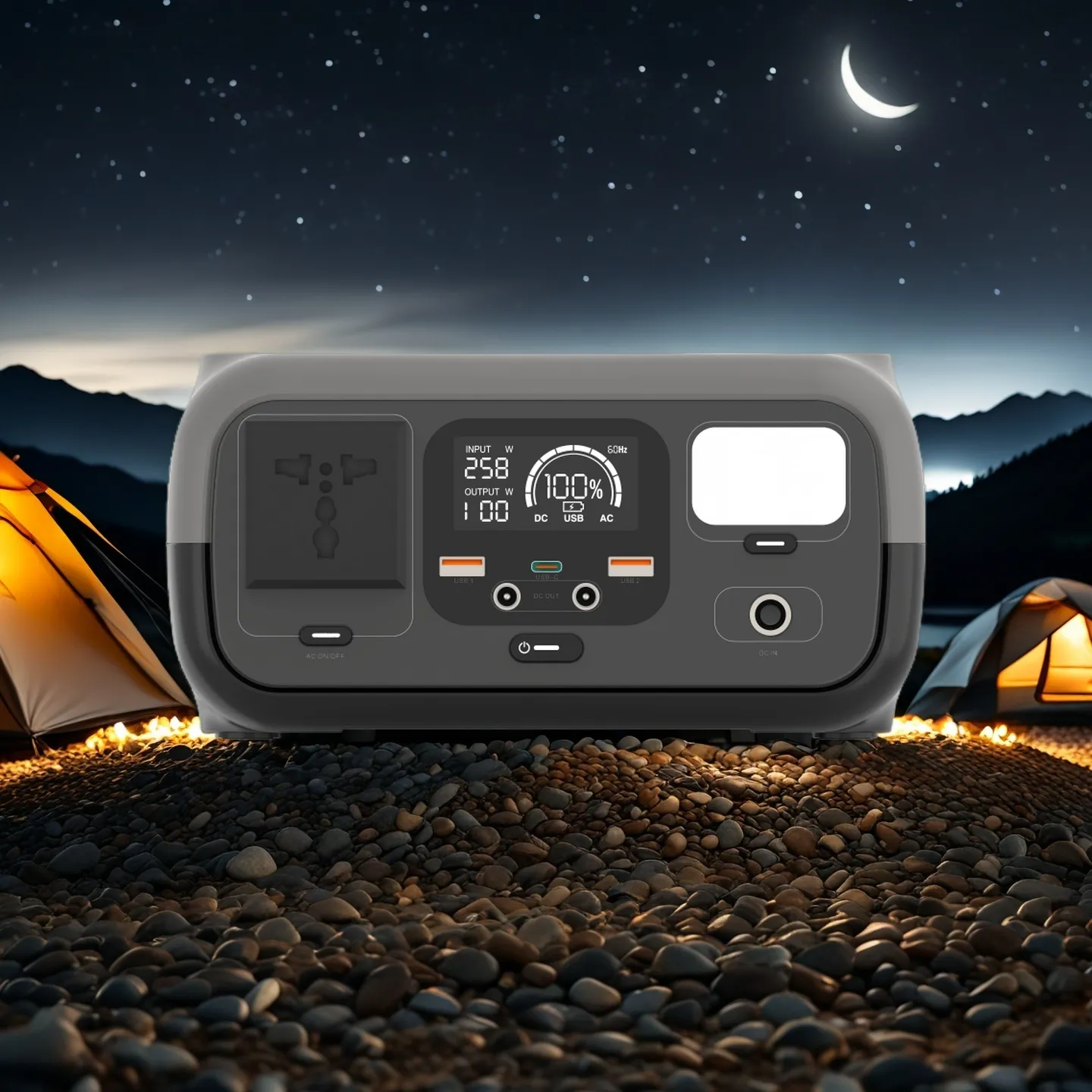
Portable power stations have become one of the fastest-growing energy solutions for camping, RV travel, home backup power, outdoor work, and emergency preparedness. But many people still ask: what is a portable power station, and how does it work?
In this guide, we’ll explain what a portable power station is, how it works, its main components, key benefits, common applications, and how to choose the right model for your power needs.
What Is a Portable Power Station?
A portable power station is a rechargeable battery-powered device designed to provide electricity anytime and anywhere.
Unlike traditional gas generators, portable power stations store electrical energy in built-in batteries and deliver clean, quiet, and emission-free power for electronic devices and appliances.
Most portable power stations include:
- Rechargeable lithium battery
- AC outlets
- USB ports
- DC outputs
- Solar charging input
- Battery management system (BMS)
- Inverter system
Portable power stations can usually be charged from wall outlets, car chargers, and solar panels. They are widely used for camping, RV travel, home backup power, outdoor work, emergency preparedness, and off-grid living.
How Does a Portable Power Station Work?
A portable power station stores electricity inside a rechargeable battery and converts it into usable AC or DC power for your devices.
Main Working Process
1. Energy Storage
Electricity is stored inside lithium batteries, usually LiFePO4 or lithium-ion batteries.
2. Power Conversion
An internal inverter converts DC battery power into AC electricity, allowing the unit to power household appliances and electronic devices.
3. Power Output
Users can connect devices through AC outlets, USB-A ports, USB-C ports, DC outputs, and car charging ports.
4. Recharging
The unit can recharge through AC wall charging, solar panels, or vehicle charging.
Main Components of a Portable Power Station
Battery Pack
The battery is the core of the system. Most modern portable power stations use LiFePO4 batteries or lithium-ion batteries.
LiFePO4 batteries are often preferred because they offer:
- Longer lifespan
- Better thermal stability
- Higher safety
- More charge cycles
Inverter
The inverter converts battery DC power into AC power. High-quality portable power stations usually use pure sine wave inverters, which provide stable power for sensitive electronics.
Battery Management System (BMS)
The BMS protects the battery from overcharging, overheating, short circuits, overcurrent, and deep discharge.
Charging Controller
The charging controller manages input charging from solar panels, AC charging, and car charging.
Portable Power Station vs Gas Generator
Many users compare portable power stations with traditional gas generators. The two products are both used for backup power, but they work in very different ways.
| Feature | Portable Power Station | Gas Generator |
|---|---|---|
| Noise | Quiet | Loud |
| Fuel | No fuel needed | Gasoline or diesel |
| Emissions | Zero emissions | Produces exhaust |
| Indoor Use | Safe | Dangerous |
| Maintenance | Minimal | Regular maintenance required |
| Solar Charging | Yes | No |
| Portability | Lightweight | Heavy |
| Startup | Instant | Manual start |
Portable power stations are ideal for users looking for quiet operation, clean energy, indoor-safe backup power, and solar compatibility.
Benefits of Portable Power Stations
Clean Energy
Portable power stations produce no emissions during use and can support solar charging, making them a cleaner alternative to fuel-powered generators.
Quiet Operation
Unlike gas generators, portable power stations operate quietly. This makes them suitable for camping, RV travel, indoor use, and nighttime backup power.
Portable Design
Modern units are compact and easy to carry, making them convenient for outdoor activities and mobile power needs.
Solar Charging Compatibility
Many models support portable solar panels, allowing users to recharge the unit off-grid.
Safe for Indoor Use
Because portable power stations do not burn fuel, they do not produce carbon monoxide during use.
Fast Charging Technology
Advanced models support fast AC charging and efficient solar charging, helping users restore power more quickly.
Common Applications of Portable Power Stations
Camping
Portable power stations can power lights, fans, phones, laptops, and portable refrigerators during camping trips.
Related: Portable Power Station for Camping
RV Power
RV users rely on portable power stations for appliances, coffee makers, TVs, CPAP machines, and other daily-use devices.
Related: Portable Power Station for RV
Home Backup Power
During power outages, portable power stations can support WiFi routers, refrigerators, medical devices, and lighting systems.
Related: Home Backup Power Solutions
Emergency Preparedness
Portable power stations are excellent emergency backup systems during storms, hurricanes, earthquakes, blackouts, and other unexpected situations.
Outdoor Work
Construction crews, mobile workers, and outdoor professionals use portable power stations for reliable power at job sites and remote locations.
What Can a Portable Power Station Run?
Depending on battery capacity and inverter size, portable power stations can run many common devices.
| Device | Typical Runtime |
|---|---|
| Smartphone | 20-100 charges |
| Laptop | 5-20 charges |
| Mini fridge | 5-20 hours |
| CPAP machine | 1-3 nights |
| TV | 4-15 hours |
| Electric grill | Depends on wattage |
Always check battery capacity, measured in watt-hours (Wh), and AC output wattage before choosing a model.
How to Choose the Right Portable Power Station
1. Battery Capacity
Battery capacity is measured in watt-hours (Wh). Smaller models, such as 300Wh units, are suitable for phones and small electronics. Around 1000Wh is often used for camping and RV power. Larger 2000Wh+ models are better suited for home backup power.
2. Output Power
Check the wattage requirements of the appliances you plan to run. The portable power station should have enough rated output and surge power for your devices.
3. Battery Type
LiFePO4 batteries are recommended for users who want longer lifespan, better safety, and more charging cycles.
4. Charging Speed
Look for fast AC charging and MPPT solar charging if you need quicker recharging in daily or emergency use.
5. Solar Compatibility
Choose models that are compatible with portable solar panels if you need off-grid charging.
Related: Portable Solar Panels
Are Portable Power Stations Worth It?
Yes, especially for users who need reliable backup power, outdoor electricity, emergency preparedness, RV energy, or clean off-grid power.
Modern portable power stations provide a safer, cleaner, and quieter alternative to traditional generators.
Why Businesses Choose OEM Portable Power Stations
For distributors, wholesalers, and brands, OEM portable power stations offer flexible product options for different markets and customer needs.
Common OEM options include:
- Custom branding
- Private label options
- Battery customization
- Packaging customization
- Wholesale pricing
MWENERGY provides OEM portable power station manufacturing, ODM development, private label solutions, and custom energy storage solutions.
Why Choose MWENERGY?
MWENERGY is a professional portable power station manufacturer with 14+ years of solar industry experience.
We specialize in:
- Portable power stations
- Solar generators
- Solar inverters
- Energy storage systems
Our advantages include:
- OEM and ODM expertise
- Advanced manufacturing
- LiFePO4 battery solutions
- Strict quality control
- Global export experience
Related Products: 1000W Portable Power Station, 2000W Portable Power Station, Solar Generator, Portable Solar Panel
Frequently Asked Questions
Can a portable power station run a refrigerator?
Yes. Larger models can power refrigerators for several hours depending on battery capacity, refrigerator wattage, and usage conditions.
Can portable power stations be charged with solar panels?
Yes. Most modern portable power stations support solar charging when connected to compatible solar panels.
Are portable power stations safe indoors?
Yes. Since they produce no exhaust fumes during use, portable power stations are safe for indoor backup power applications.
How long do portable power stations last?
LiFePO4 portable power stations can last over 3,000 charge cycles, depending on battery quality, usage, and charging habits.
Final Thoughts
Portable power stations are changing the way people access electricity for outdoor activities, emergency backup, RV travel, and off-grid living.
Compared with traditional gas generators, they offer quiet operation, clean energy, solar compatibility, portability, and low maintenance.
As demand for clean portable energy continues to grow, portable power stations are becoming an essential power solution for both consumers and businesses worldwide.
If you’re looking for reliable OEM or wholesale portable power station solutions, MWENERGY can support your project with customizable products and professional manufacturing experience.